Dr. Jennifer Maw and her team have been performing cochlear implantation in adults and children for over 20 years. Our implant audiologists have extensive knowledge and clinical training in the evaluation and counseling of candidacy of patients and the programming and management of these life-changing devices.
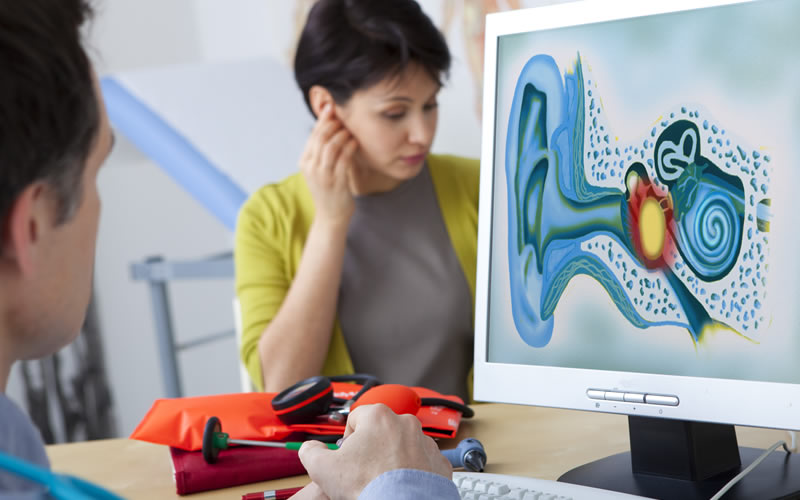
A cochlear implant is an excellent alternative when hearing aids do not provide optimal support to a person in everyday listening situations. A cochlear implant is a partially implanted medical device designed to restore the sense of hearing. It is inserted into the cochlea, the sensory organ of the inner ear. It directly stimulates the cochlear nerve, bypassing the external ear, middle ear, and inner ear with its damaged hair cells. After a successful cochlear implant, most patients are able to hear conversations and environmental sounds at comfortable loudness levels, understand others with less effort and improve their lip reading skills and telephone use.
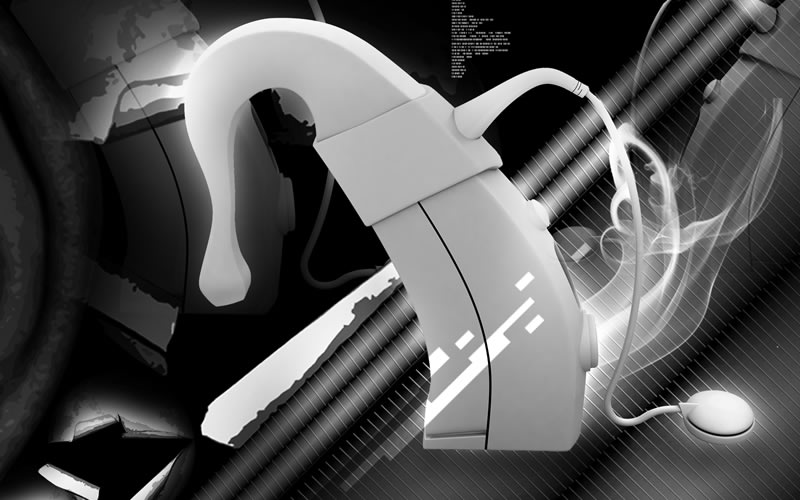
A cochlear implant system consists of an external sound processor, and an internal receiver. The internal receiver is surgically implanted under the scalp and its electrode array is inserted into the cochlea. After healing has occurred, the external processor is programmed and worn on or behind the ear and consists of a microphone, signal processor and a transmitter. The transmitter connects to the internal receiver with a magnet. The external speech processor captures sound and converts it into a digital signal. The processor sends the digital signal to the internal implant, which then converts the digital signal into an electrical signal. The electrical signal is transmitted via the electrode array inside the cochlea, and the auditory nerve is then stimulated to carry sound to the brain.
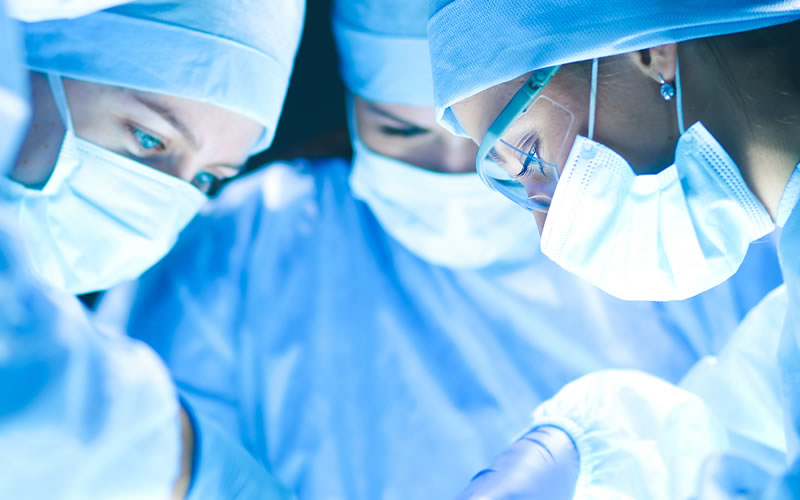
Cochlear implantation is a 1-2 hour outpatient surgical procedure. A small amount of hair is shaved and the incision is well hidden behind the ear and in the hairline. Most patients require little to no narcotic pain medications. A dressing is worn overnight. Self-dissolving stitches are used, there is minimal swelling and bruising and the skin incision heals within 2 weeks. Antibiotics are prescribed for 1 week. The external processor is activated 2-3 weeks after the surgery.
Candidacy criteria for a cochlear implant has broadened in recent years, so many people who previously were not considered candidates are now receiving cochlear implants with successful results. In many cases, implantation may be done for both ears, either simultaneously during the same surgery, or sequentially.
Cochlear implants are indicated for adult patients with moderate to profound hearing loss who can no longer significantly benefit from hearing aids because of hair cell damage in the inner ear. They are indicated in children 2-17 years of age with severe to profound sensorineural hearing loss in both ears and in children 9 to 24 months of age with profound sensorineural hearing loss in both ears.
A team of professionals conducts an extensive evaluation to determine if an individual is a suitable candidate for a cochlear implant. The cochlear implant candidacy evaluation includes an extensive audiological evaluation by an audiologist, a medical evaluation by an otologist, radiological evaluation, which includes CT or MRI scanning, and educational, psychological and speech and language evaluations in children.
N7 external processor and internal implant by Cochlear Americas
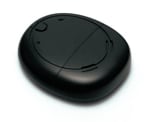
Kanso external processer by Cochlear Americas
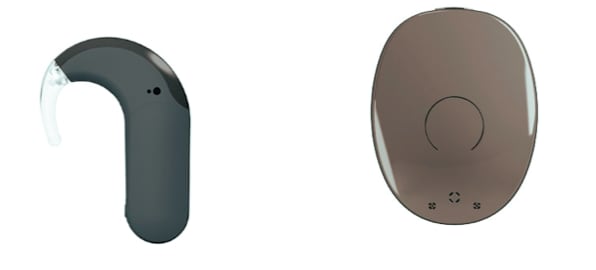
Sonnet 2 and Rondo 2 by MEDEL

Syncrhony 2 internal implant by MEDEL
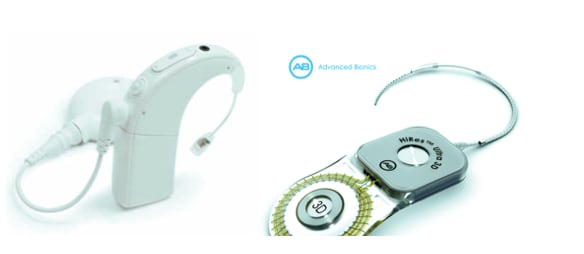
Naida CI Q90 external processor and NA HIRes Ultra 3D internal processor by Advanced Bionics
Over the years, cochlear implants and surgery have been modified and improved to decrease the changes that occur in the inner ear when an implant is inserted. It was previously expected that a patient undergoing a cochlear implant would lose all their residual hearing, no longer be able to hear with their hearing aid and only be able to hear with the use of the implant after surgery. This is no longer the case as more and more patients get to keep a significant amount of their residual hearing. In some patients with very good hearing (usually in the low frequencies), the residual hearing is very good and the patient can still benefit from a hearing aid. They are then fitted with a “hybrid processor” which is part acoustic and electric. The preservation of the residual hearing can be further improved if a hybrid implant in inserted instead of a regular cochlear implant. In reality, a hybrid implant is a short cochlear implant that is designed to increase the chance of maintaining good low frequency hearing after surgery. If you are a candidate for a hybrid device, this will be evaluated and reviewed during your cochlear implant evaluation. The surgery and complications are identical to those of a regular cochlear implant but 20 percent of patients loose their residual hearing after surgery or over time.
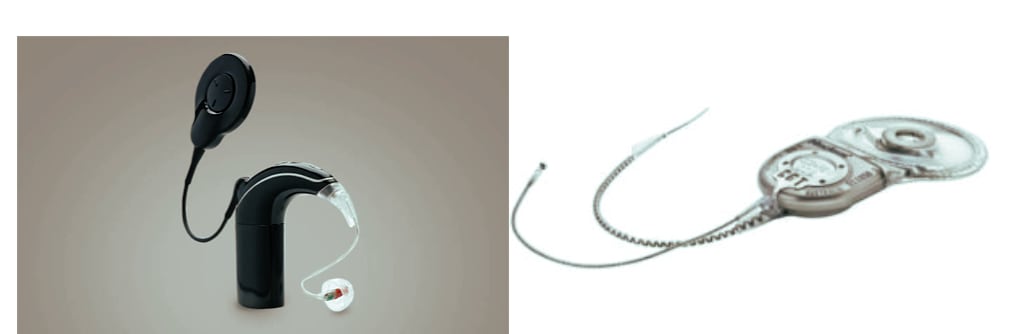
Nucleus 7 external processor with acoustic component and hybrid L24 internal implant by Cochlear Americas
Cochlear implant surgery is usually performed as on an out-patient basis, and is usually a fairly minor procedure to undergo. It is performed under general anesthesia and takes about 1.5-2 hours. The site of the internal receiver is first planned out and drawn on the skin. The incision is then planned and performed. The bed for the internal receiver is prepared, and small holes are drilled in the skull to allow the device to be secured to the skull. The mastoid bone is then opened, and the middle ear is then entered. The round window is opened, and a tiny hole is made in or near the round window to enter the cochlea, which is called a cochleostomy. The implant’s electrode array is then inserted into the cochleostomy. A few tiny pieces of muscle are inserted around the electrode array to seal the hole and the wire is placed in the mastoid. The internal receiver is sutured to the skull. The incision is closed and the integrity of the device is sometimes checked with electrical equipment and an x-ray is sometimes ordered to confirm the position of the device in the cochlea. A dressing is wrapped around the head.
Cochlear Implant ImagesFor more information on cochlear implants or to find out if you can benefit from a cochlear implant contact us at 408-540-5400.